AI, explained through experiments
Understand AI.
Try it with your own hands.
Explore artificial intelligence through visual experiments you control. See how it learns, works with words, and makes pictures. Start with a guided experiment—no math or coding needed.
Free to explore · no account needed · learn at your own pace
Start here · about 5 minutes
From a little noise
to a lighthouse.
Move a slider and watch an AI-generated picture take shape. Then change the starting noise and see why the same words can lead to a different image.
We’ll guide you through what to try, what to notice, and what it means.
Open the guided experiment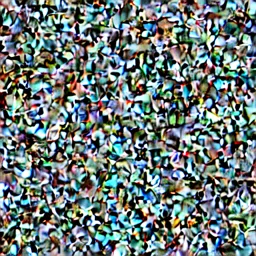

Follow your curiosity
Pick a question. Open an experiment.
New to AI? Diffusion and computer vision both include a guided introduction. Try the controls, read the explanations, and explore the technical details when you’re ready.
How AI works
For a course-like path, follow these in order.
Classical ML
How do computers learn from examples?
The Boundary Lab
Neural Networks
How does a model get better with practice?
The Descent
Image Interpolation
Why does enlarging a picture make it blurry?
Interlude
CNNs & Vision
How do computers find patterns in pictures?
The Convolution Bench
Transformers
How does AI connect words in a sentence?
The Attention Lens
Diffusion
How does AI turn noise into an image?
The Denoising Deck
Using AI tools
Go further with prompts, feedback, and agents.
Prompt · Loop · Agent
What makes an AI assistant an agent?
The Feedback Bench
Graph Engineering
How can AI agents work together?
The Wiring Loom
Already comfortable with the basics?
The full labs are here too: real model recordings, adjustable controls, and explanations of the math behind them.
A note from the builder
Built to make the ideas stick.
I’m James Caldwell. I built Perceptron Lab while revisiting machine learning and exploring AI image tools. The ideas made more sense when I could change something and see what happened.
It began with two confusingly similar names: “nearest-neighbor” image scaling and “nearest neighbors” in machine learning. Compare nearest-neighbor, bilinear, and bicubic resizing. This site is my growing collection of experiments for fellow learners—whether you’re meeting these ideas for the first time or coming back to them.